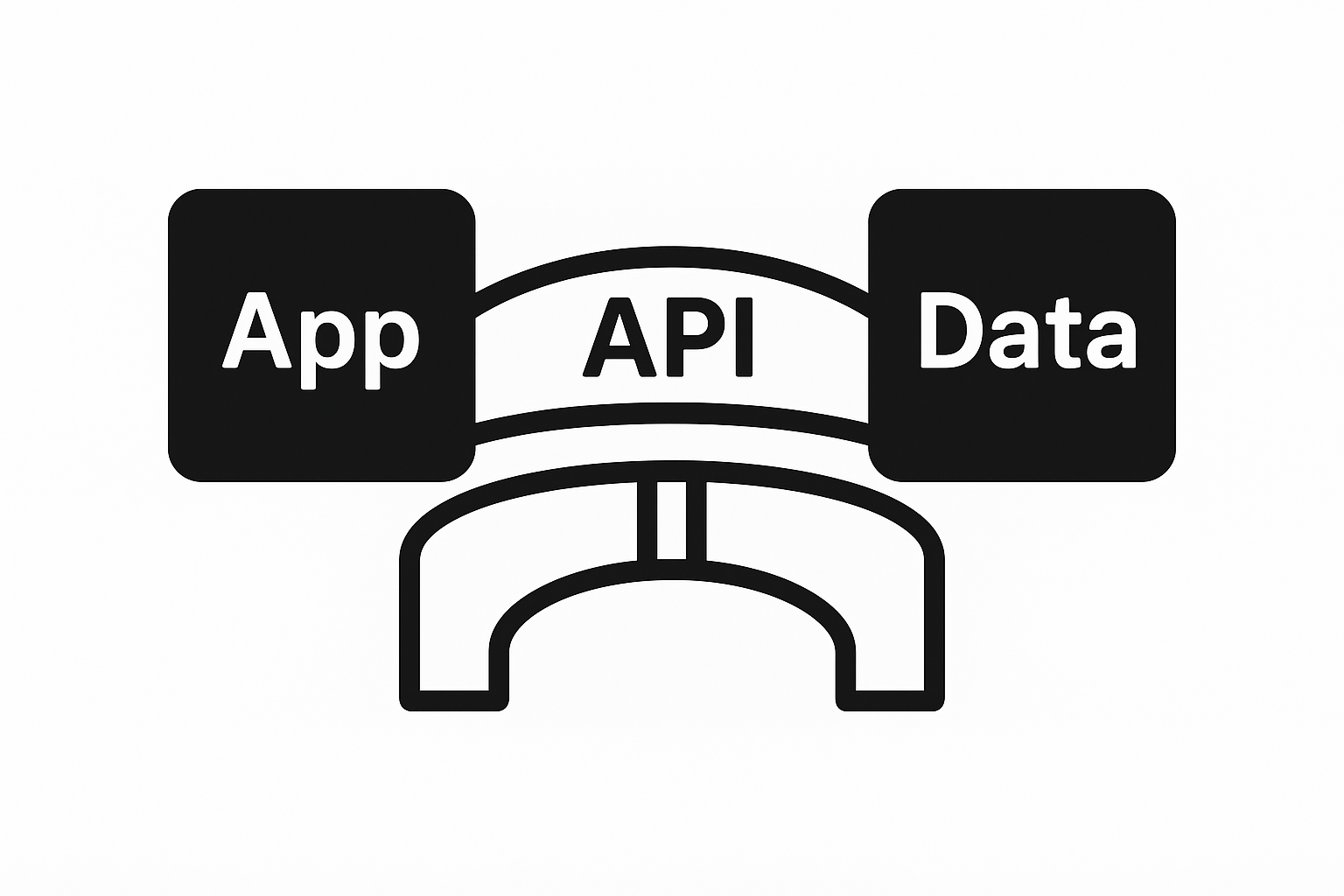
Picture this: You're booking a flight online. You select dates, the website instantly shows prices from dozens of airlines, processes your payment through your bank, and sends you a confirmation via email. All of this happens in seconds, without anyone manually calling airlines or processing paperwork.
What just happened? You witnessed APIs in action—the invisible workforce that makes our connected world possible.
Breaking Down the Acronym (Without the Tech Speak)
API stands for Application Programming Interface, but let's skip the textbook definition.
Here's what an API actually does: It lets different software applications share information and work together, automatically.
Think of it as the digital equivalent of a skilled translator at the United Nations. Just as translators enable delegates speaking different languages to communicate seamlessly, APIs enable different software systems to understand and work with each other.
The Travel Adapter That Changed Everything
Forget the old restaurant analogy everyone uses for APIs. Here's a better way to understand them:
Remember the first time you traveled internationally and realized your phone charger wouldn't fit the wall outlets? You needed an adapter—a simple device that made two incompatible systems work together.
APIs work exactly like this:
- Your phone = one application
- The foreign outlet = another application
- The adapter = the API that makes them
But unlike physical adapters, APIs can handle multiple "devices" simultaneously and translate not just connections, but entire conversations between systems.
Why Every Business Suddenly Became an API Company
Walk into any startup pitch today, and you'll hear "We have an API" mentioned within the first five minutes. This isn't technical showboating—it's smart business strategy.
The integration expectation: Modern users don't just want great software; they want software that plays well with everything else they use. A project management tool that can't sync with Slack? A payment system that doesn't connect to accounting software? Dead on arrival.
The multiplication effect: When other developers build tools using your API, they become unpaid marketers for your product. Stripe powers millions of online stores not through traditional advertising, but because developers love their API and recommend it to others.
The automation promise: Every manual task costs businesses time and money. APIs turn repetitive human work into automatic background processes, and companies will pay premium prices for that transformation.
APIs in Your Daily Digital Life
You interact with dozens of APIs every day without realizing it:
That weather widget on your phone? It's pulling data from a meteorological service's API every few minutes.
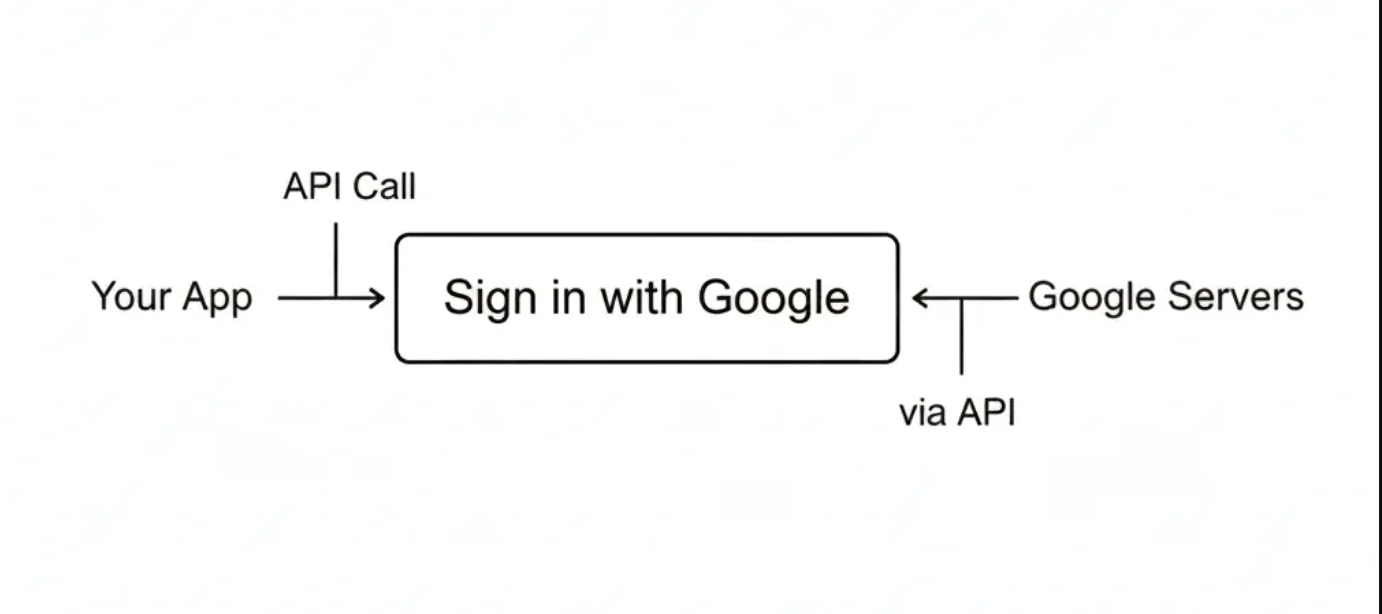
When you sign in to a new app using your Google account? That's Google's authentication API verifying your identity instantly.
Those product recommendations on Amazon? Multiple APIs analyzing your browsing history, purchase patterns, and similar customers' behavior.
When your fitness tracker syncs with your health app? APIs moving your step count, heart rate data, and sleep patterns between different systems.
The magic isn't in any single API—it's in how they work together to create experiences that feel effortless.
The Three API Personalities You Should Know
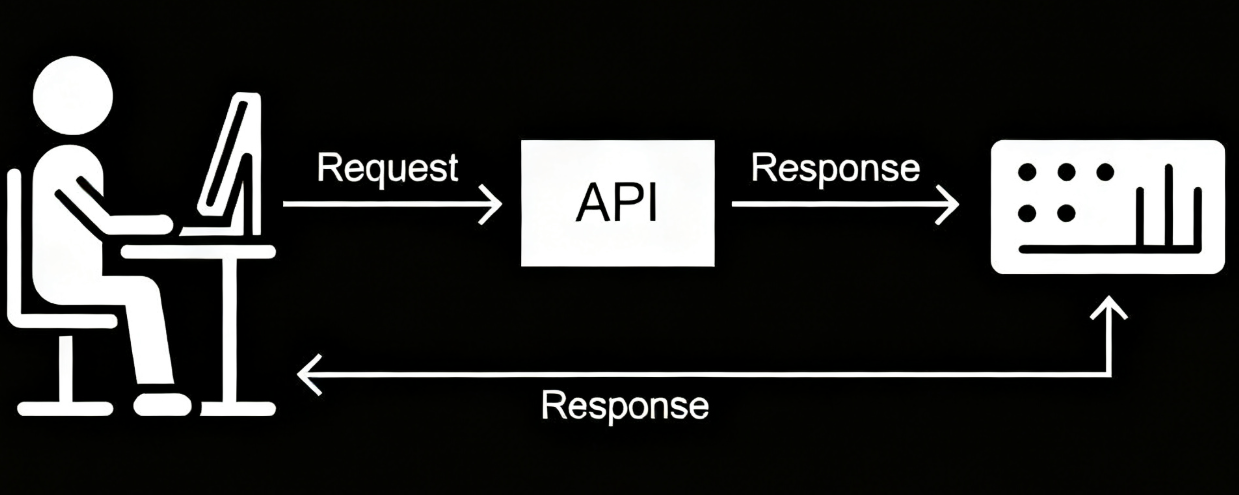 APIs come in different flavors, each suited for different jobs:
REST APIs are like ordering from a traditional menu. You make specific requests ("Give me user data for John Smith") and get predictable responses. Most web services use these because they're reliable and straightforward.
GraphQL APIs are like having a custom chef. Instead of ordering fixed menu items, you specify exactly what ingredients you want ("Give me John's name and email, but skip everything else"). This prevents information overload and makes apps faster.
Webhooks are the notification system of the API world. Instead of constantly asking "Has anything new happened?", they tap you on the shoulder when something important occurs. Think of how PayPal instantly notifies your website when a payment completes.
Why This Matters for Your Business (Even If You're Not Technical)
APIs aren't just developer tools—they're business accelerators:
Faster launches: Instead of building payment processing from scratch, use Stripe's API. Instead of creating your own mapping system, integrate Google Maps. APIs let you focus on what makes your business unique.
Better customer experiences: Your customers use multiple tools throughout their day. APIs ensure your product fits smoothly into their existing workflow rather than creating another silo.
Future-proofing: When new platforms emerge (remember when everyone had to scramble to integrate with TikTok?), having a flexible API strategy means you can adapt quickly.
Data intelligence: APIs can feed customer behavior data into analytics tools, helping you understand what's working and what isn't in real-time.
The Network Effect Revolution
We're living through a fundamental shift. Software used to be like isolated islands—powerful within their boundaries but cut off from everything else. APIs have turned them into connected cities with bridges, tunnels, and highways linking every district.
This connectivity creates compound value. Your email marketing tool becomes more valuable when it connects to your e-commerce platform. Your project management software becomes indispensable when it talks to your team chat, calendar, and file storage systems.
What This Means for Tomorrow
As artificial intelligence becomes mainstream, APIs are becoming even more critical. Most AI-powered applications don't build their own language models—they connect to services like OpenAI, Anthropic, or Google through APIs. This means smaller companies can access cutting-edge AI capabilities without massive infrastructure investments.
The businesses thriving in the next decade won't necessarily be those with the most features, but those with the best connections. APIs are the infrastructure of that connected future.
The Bottom Line
The next time you see an "API" section in a software product, don't think of it as technical complexity. Think of it as a promise: "We believe in connection over isolation. We want to make your work life simpler, not more complicated."
In our hyper-connected world, APIs aren't just technical tools—they're the universal language that helps our digital tools work together as seamlessly as we do.